Undergoing an alkaline diet for lean body composition is a goal that resonates deeply with bodybuilders and fitness enthusiasts. As someone who has journeyed through the highs and lows of various diet plans, I understand the significance of finding a sustainable approach to staying lean and fit.
I remember the frustration of trying different diets that promised results but fell short of maintaining my hard-earned muscle mass. It wasn’t until I discovered the alkaline diet that I found a balanced and effective way to support my body’s needs while achieving a lean physique.
The alkaline diet focuses on consuming foods that help maintain the body’s optimal pH level. This means incorporating more alkaline-forming foods like fruits, vegetables, nuts, and legumes while limiting acidic foods such as meat, dairy, and processed items. The basic principle is to balance the body’s pH to promote overall health and metabolic efficiency. For those engaged in bodybuilding nutrition and diet, this approach can complement muscle maintenance and recovery goals by emphasizing nutrient-dense, plant-based foods that support inflammation reduction and metabolic balance, both essential for bodybuilders aiming for a lean and fit physique.
The purpose of this article is to provide long-term strategies for sustaining lean body composition through the alkaline diet. By understanding the science behind this diet and how to implement it practically, you can achieve and maintain your fitness goals without compromising muscle mass or overall health. Incorporating Omega-3 rich meals for lean muscle can further enhance these efforts by providing essential fatty acids that support muscle recovery and reduce inflammation. Omega-3s from sources like salmon, chia seeds, and flaxseeds are ideal additions, helping to preserve lean muscle while promoting a balanced, nutrient-rich diet.

Understanding the Alkaline Diet
Basic Principles
The core principles of the alkaline diet revolve around consuming alkaline-forming foods such as fruits, vegetables, nuts, and legumes, while limiting acidic foods like meat, dairy, and processed foods. The goal is to maintain a balanced pH level in the body, ideally around 7.35 to 7.45.
PH Balance
pH balance is crucial for bodily functions and metabolism. An alkaline environment can enhance cellular function, reduce inflammation, and improve overall health. This balance can be achieved by prioritizing alkaline foods, which help neutralize excess acidity in the body.
Alkaline Diet for Beginners
Starting an alkaline diet involves simple steps:
- Gradually increase the intake of fruits and vegetables.
- Reduce the consumption of processed foods, sugars, and red meat.
- Drink plenty of water, preferably with a splash of lemon to boost alkalinity.
- Focus on whole, unprocessed foods to maintain a natural balance.

The Science Behind the Alkaline Diet for Lean Body Composition
Metabolic Benefits
The Paleo Diet Meal Planning for Leaning approach can support metabolism by prioritizing nutrient-dense, anti-inflammatory foods, which improve cellular function. This dietary focus enhances the body’s ability to efficiently convert food into energy, promoting fat loss and effective weight management.
Muscle Preservation
For bodybuilders, preserving muscle mass is crucial. The alkaline diet supports muscle preservation by reducing muscle protein breakdown, which can occur in acidic environments. Alkaline foods provide essential nutrients that support muscle recovery and growth.
Scientific Evidence
Research supports the benefits of the alkaline diet for body composition. Studies indicate that an alkaline diet can improve metabolic health, reduce inflammation, and support muscle preservation, all of which contribute to a leaner physique.
Alkaline Diet and Muscle Gain
A common concern is whether muscle building is feasible on an alkaline diet. The answer is yes. By focusing on protein-rich alkaline foods like nuts, seeds, and legumes, and incorporating proper strength training, you can build and maintain muscle effectively.

Practical Implementation of the Alkaline Diet
Meal Planning
Planning meals that adhere to the alkaline diet principles involves:
- Ensuring each meal includes a variety of vegetables.
- Incorporating protein sources such as nuts, seeds, and legumes.
- Using herbs and spices for flavor without added acidity.
- Preparing meals in advance to avoid resorting to processed options.
Sample Alkaline Diet Meal Plan
Breakfast
- Smoothie with spinach, kale, banana, and almond milk
- Oatmeal topped with berries and flax seeds
Lunch
- Quinoa salad with mixed greens, cherry tomatoes, cucumber, and avocado
- Lentil soup with a side of steamed broccoli
Dinner
- Grilled vegetable platter with quinoa
- Stir-fried tofu with bell peppers and asparagus
Snacks
- Almonds and walnuts
- Fresh fruit slices

Grocery List
Here’s a comprehensive grocery list for the alkaline diet:
- Fruits: Apples, bananas, berries, citrus fruits
- Vegetables: Spinach, kale, broccoli, cucumbers, bell peppers
- Nuts and Seeds: Almonds, walnuts, chia seeds, flax seeds
- Legumes: Lentils, chickpeas, black beans
- Grains: Quinoa, amaranth, millet
Alkaline Foods List
Key alkaline foods to include:
- Leafy greens (spinach, kale)
- Cruciferous vegetables (broccoli, cauliflower)
- Citrus fruits (lemons, limes)
- Nuts and seeds (almonds, flax seeds)
- Legumes (lentils, chickpeas)
Top 10 Alkaline Foods
- Spinach
- Kale
- Broccoli
- Cucumbers
- Avocado
- Almonds
- Lemons
- Quinoa
- Lentils
- Bell peppers

Combining Alkaline Diet and Exercise
Exercise Recommendations
To complement the alkaline diet, engage in:
- Strength training: To build and maintain muscle mass
- HIIT: To boost metabolism and fat loss
- Flexibility exercises: Such as yoga or stretching to enhance recovery
Workout Plans
Sample Workout Plan
Day 1: Strength Training (Upper Body)
Day 2: HIIT
Day 3: Rest or light yoga
Day 4: Strength Training (Lower Body)
Day 5: HIIT
Day 6: Full Body Workout
Day 7: Rest or light stretching
Nutrient Timing
Align meals with workout schedules to maximize performance:
- Pre-workout: A small meal with carbs and protein (e.g., banana with almond butter)
- Post-workout: A protein-rich meal with some carbs (e.g., quinoa salad with chickpeas)

Long-Term Sustainability Strategies
Gradual Transition
Transitioning to the alkaline diet should be gradual. Start by incorporating more vegetables and reducing processed foods. This helps in adapting to new eating habits without feeling overwhelmed.
Overcoming Challenges
Common challenges include cravings for acidic foods and social eating. To stay on track, prepare alkaline-friendly snacks and plan ahead for social events.
Adaptation Tips
Adapt the diet to fit your preferences. For example, if you enjoy a specific vegetable, find multiple ways to prepare it. Personally, I found that experimenting with different recipes made it easier to stick to the diet.

What is the Alkaline Diet 80/20 rule?
The 80/20 rule suggests that 80% of your diet should be alkaline-forming foods, while the remaining 20% can be acidic. This balance helps in maintaining long-term adherence and flexibility.
Monitoring Progress and Adjusting the Diet
Tracking Metrics
Track progress through:
- Body measurements (waist, hips, etc.)
- Weight
- Performance metrics (strength, endurance)
Adjusting the Diet
Adjust your diet based on progress. If you’re not seeing desired results, consult a nutritionist to tweak your meal plans.
Seeking Professional Help
For personalized advice, consider consulting with nutritionists or dietitians who can help tailor the alkaline diet to your specific needs and goals.
How to Tell if Your Body is Alkaline or Acidic
Use pH test strips to measure the acidity of your urine or saliva. Personally, I’ve found these tests to be a helpful way to monitor my body’s pH levels and make necessary dietary adjustments.

Potential Risks and Mitigation
Nutrient Deficiencies
Potential nutrient deficiencies, such as vitamin B12 or iron, can be mitigated through careful meal planning and, if necessary, supplementation.
Digestive Issues
Some individuals may experience digestive issues when starting the alkaline diet. Personally, incorporating more fiber gradually and staying hydrated helped alleviate these issues.
Health Conditions
Those with specific health conditions should consult a healthcare provider before starting the alkaline diet to avoid potential contraindications.

Quick Tips for Making Your Body More Alkaline
How to Make Your Body Alkaline in One Day
To quickly increase alkalinity:
- Start your day with a green smoothie
- Drink plenty of water with lemon
- Eat a large salad with mixed greens for lunch
- Snack on raw vegetables and nuts
- Avoid processed foods and sugars
What Foods Should You Eat to Make Your Body More Alkaline?
Focus on foods like:
- Leafy greens
- Fresh fruits
- Nuts and seeds
- Legumes
- Whole grains like quinoa
How Do I Make My Body 100% Alkaline?
Striving for a fully alkaline body is not necessary and may not be feasible. Instead, aim for a balanced diet that prioritizes alkaline foods while allowing occasional acidic foods. From personal experience, this approach is more sustainable and enjoyable.

FAQ
What is a lean body composition?
Lean body composition refers to a body that has a higher proportion of muscle mass compared to fat. This is typically the goal for bodybuilders and fitness enthusiasts as it enhances physical performance and aesthetics.
How does the alkaline diet benefit bodybuilding?
The alkaline diet supports bodybuilding by promoting a balanced pH level, which helps reduce muscle fatigue and inflammation. It also provides essential nutrients that support muscle recovery and growth, crucial for bodybuilding.
What is an alkaline diet plan?
An alkaline diet plan focuses on incorporating a higher intake of alkaline-forming foods such as fruits, vegetables, nuts, and legumes while limiting acidic foods like meat, dairy, and processed foods. The plan aims to maintain an optimal pH balance in the body.
What are alkaline foods?
Alkaline foods are those that help maintain the body’s pH balance by reducing acidity. These include leafy greens, fresh fruits, nuts, seeds, legumes, and whole grains.
What are the benefits of the alkaline diet?
The benefits of the alkaline diet include improved metabolic function, reduced inflammation, enhanced muscle preservation, better hydration, and overall health improvement. It also supports weight management and fat loss.
Can beginners follow the alkaline diet?
Yes, beginners can follow the alkaline diet. Starting with simple changes like increasing vegetable intake and reducing processed foods can make the transition smoother. It’s a flexible diet that can be adjusted to individual preferences and lifestyles.
Can you gain muscle on an alkaline diet?
Yes, you can gain muscle on an alkaline diet by incorporating protein-rich alkaline foods such as nuts, seeds, and legumes. Combining this diet with a proper strength training regimen supports muscle growth and maintenance.
What is a pH balance diet?
A pH balance diet aims to maintain a balanced pH level in the body by consuming more alkaline-forming foods and reducing acidic foods. This helps enhance overall health and bodily functions.
What are the differences between alkaline vs acidic foods?
Alkaline foods reduce the acidity in the body and include fruits, vegetables, nuts, and legumes. Acidic foods increase body acidity and include meat, dairy, processed foods, and refined sugars.
What are some alkaline diet recipes?
- Green Smoothie: Blend spinach, kale, banana, and almond milk.
- Quinoa Salad: Mix cooked quinoa with mixed greens, cherry tomatoes, cucumber, and avocado.
- Stir-Fried Tofu: Stir-fry tofu with bell peppers and asparagus.
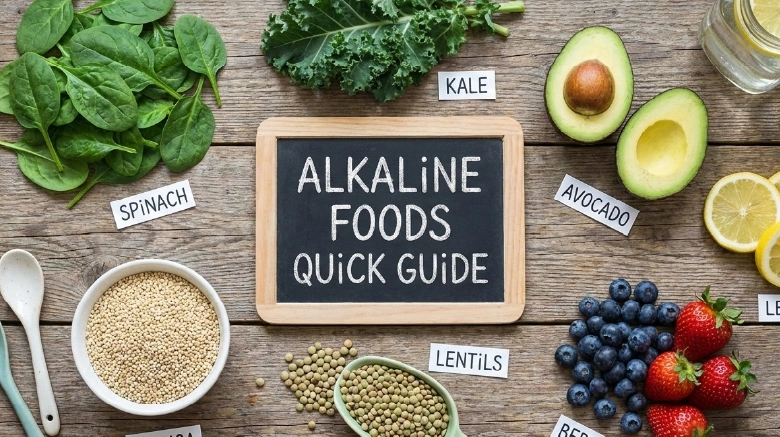
What is example of an alkaline diet grocery list?
An alkaline diet grocery list includes:
- Fruits: Apples, bananas, berries, citrus fruits
- Vegetables: Spinach, kale, broccoli, cucumbers, bell peppers
- Nuts and Seeds: Almonds, walnuts, chia seeds, flax seeds
- Legumes: Lentils, chickpeas, black beans
- Grains: Quinoa, amaranth, millet
How do you make your body more alkaline?
How To make body alkaline:
- Increase your intake of fruits and vegetables.
- Drink water with lemon.
- Reduce consumption of processed foods and sugars.
- Incorporate nuts, seeds, and legumes into your diet.
What are the top alkaline foods?
The top alkaline foods include:
- Spinach
- Kale
- Broccoli
- Cucumbers
- Avocado
- Almonds
- Lemons
- Quinoa
- Lentils
- Bell peppers
How does the alkaline diet complement exercise?
The alkaline diet complements exercise by providing essential nutrients that reduce inflammation, support muscle recovery, and enhance overall performance. It ensures that the body remains hydrated and balanced, which is crucial for optimal workout results.
What is the 80/20 rule in the alkaline diet?
The 80/20 rule in the alkaline diet suggests that 80% of your diet should consist of alkaline-forming foods, while 20% can be acidic. This balance helps maintain long-term adherence and provides flexibility.
What are the alkaline diet health benefits?
The health benefits of the alkaline diet include improved digestion, reduced inflammation, enhanced hydration, better metabolic function, and support for muscle preservation and growth. It also helps in maintaining a healthy weight and overall well-being.